Institutional Environmental Technology
Engineered microclimates
Active indoor air and surface purification for West African institutions, engineered room by room.






Sectors served from Accra.
The invisible environment
The air inside a building is a system. Most buildings never measure it.
Indoor air moves, stratifies and recirculates. It carries what a room produces and whatever the outside contributes. None of it is visible, so almost none of it is managed.
Farkona treats indoor air as engineered infrastructure: a defined volume, with defined conditions, held to a defined standard and observed continuously.
- Occupied zone
- Return path
- Treated volume
- Sensor array
Filtration waits for the air to arrive. Active purification does not.
Capture
Air must first reach the media.
Filter
Particulates are retained at the barrier.
Wait
Effect is bounded by how often air cycles through.
Detect
Conditions in the space are read continuously.
Treat
Hydroxyl radicals are dispersed through the volume, treating air and surfaces rather than only an intake.
Monitor
Response is recorded and checked against target.
The system
Integrated pathogen mitigation.
Our solutions combine advanced air and surface purification with real-time monitoring for verifiable safety across your entire facility.
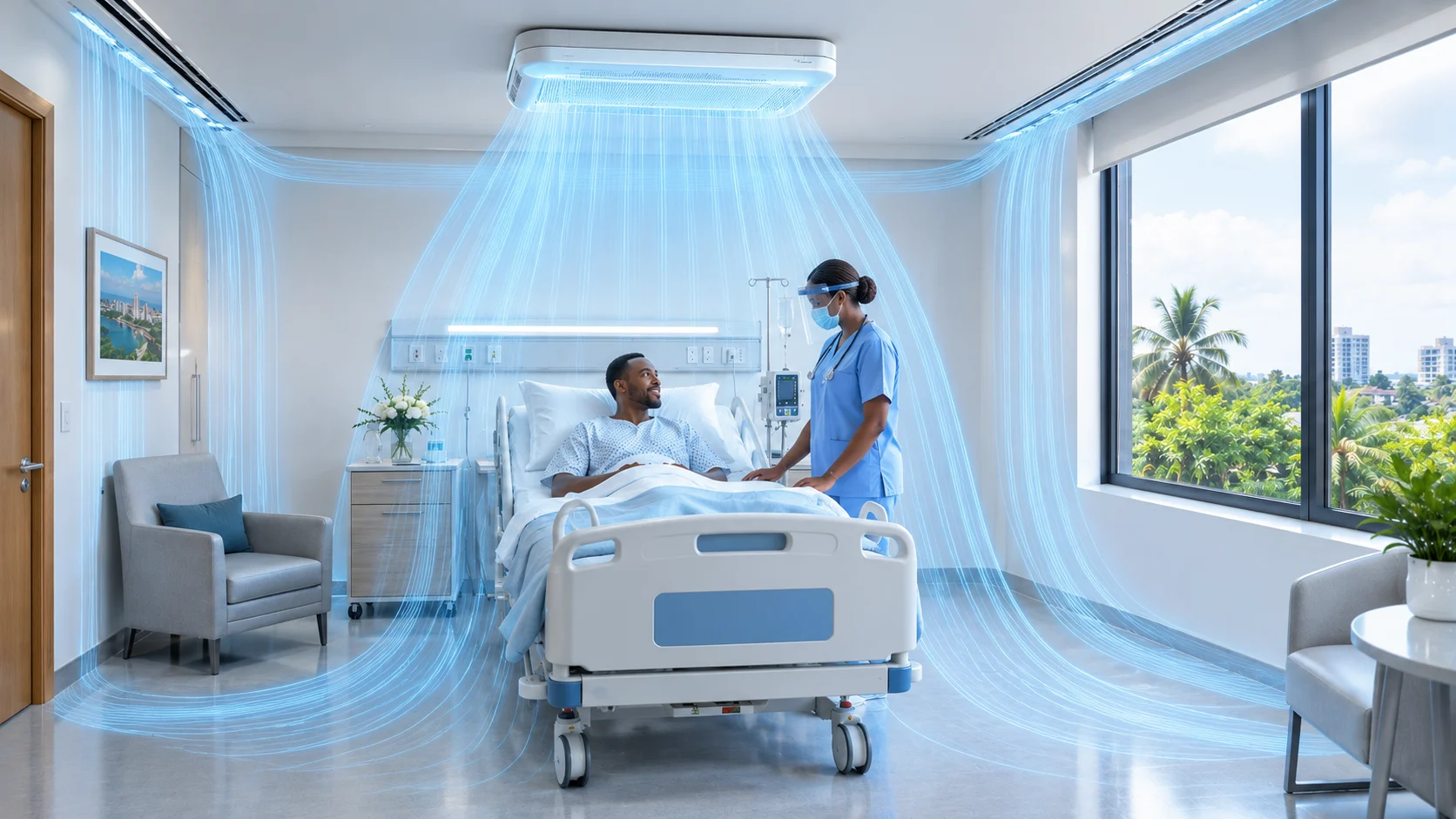
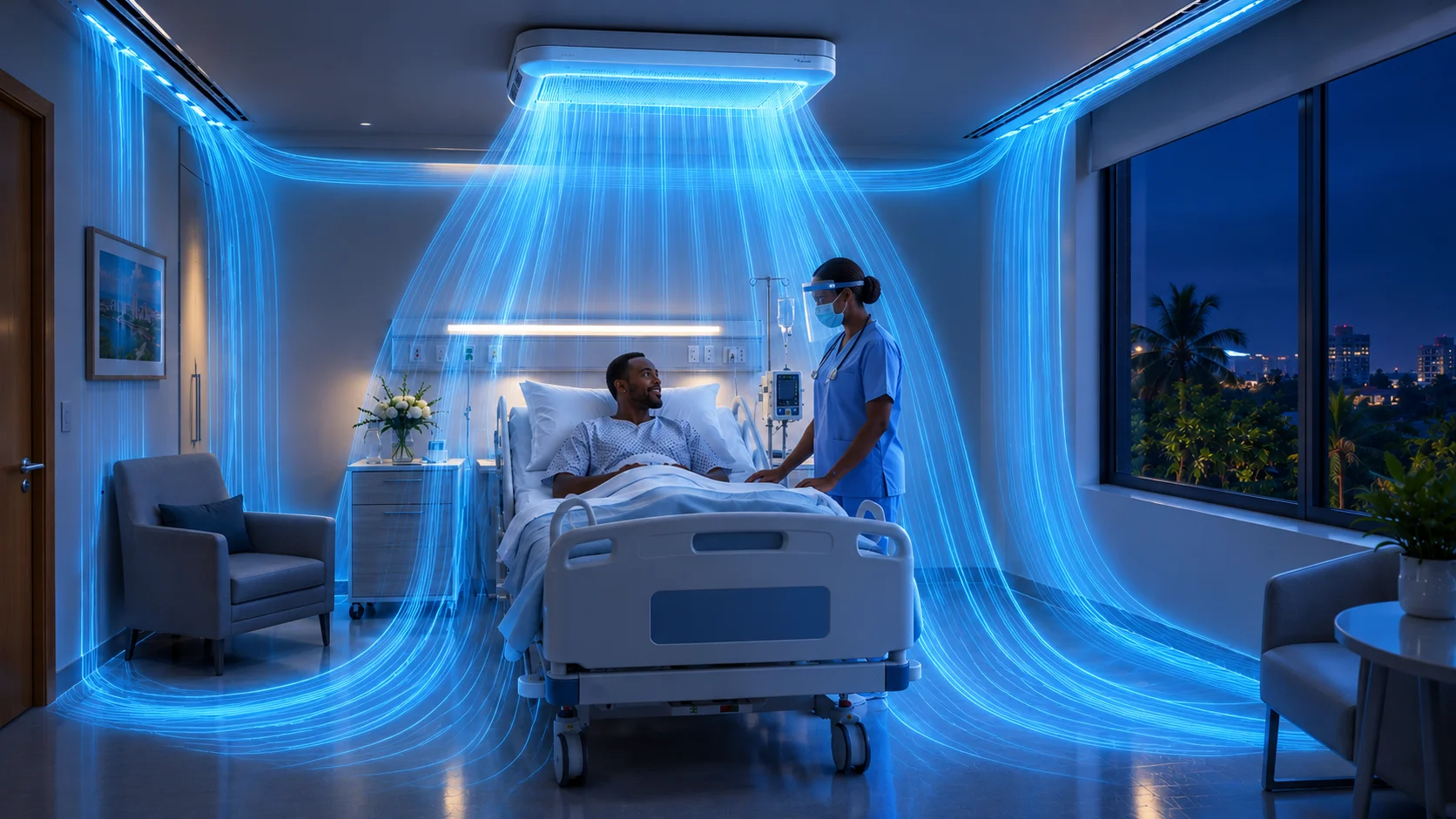
Illustration
Clean air is delivered from above, wraps around patients and staff, and carries contaminants away to the wall returns.
Active Air Decontamination
Continuously neutralizes airborne pathogens and volatile organic compounds at the molecular level, ensuring pristine air quality.
Specification pending client confirmation
Surface Pathogen Neutralization
Prevents microbial accumulation on high-touch surfaces, offering a proactive shield against secondary transmission.
Specification pending client confirmation
Real-Time Purity Metrics
Advanced sensor arrays provide verifiable telemetry, enabling institutional compliance and data-driven environmental management.
Specification pending client confirmation
Performance is only meaningful when it is measured.
- 99.9%Pathogen Mitigation
- 24/7Continuous Operation
- 100%Hardware Uptime
Supporting documentation is provided as part of a site assessment.
Agriculture and post-harvest
The same engineering, pointed at stored food.
A grain store, a cold room and a packhouse are enclosed volumes with their own air and their own surfaces.
The assessment that sizes a ward sizes a store the same way: volume, occupancy, ventilation, and what the space cannot tolerate failing.
Farkona publishes food processing and packaging facilities, refrigerated produce storage, warehouses, grain silos and indoor agriculture among the applications of the QuadPro 4-Optic.
Loss and shelf-life figures not yet supplied
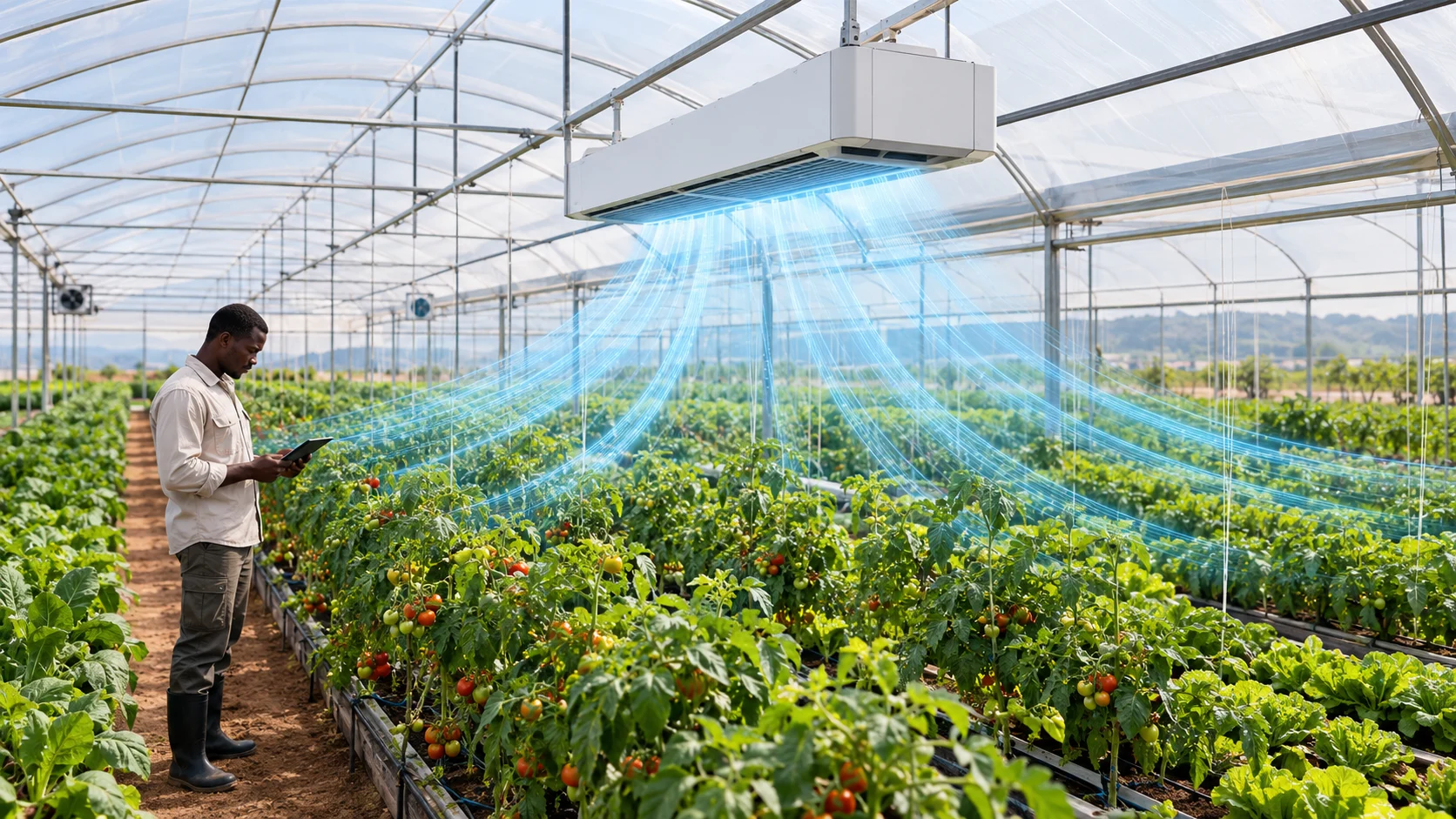
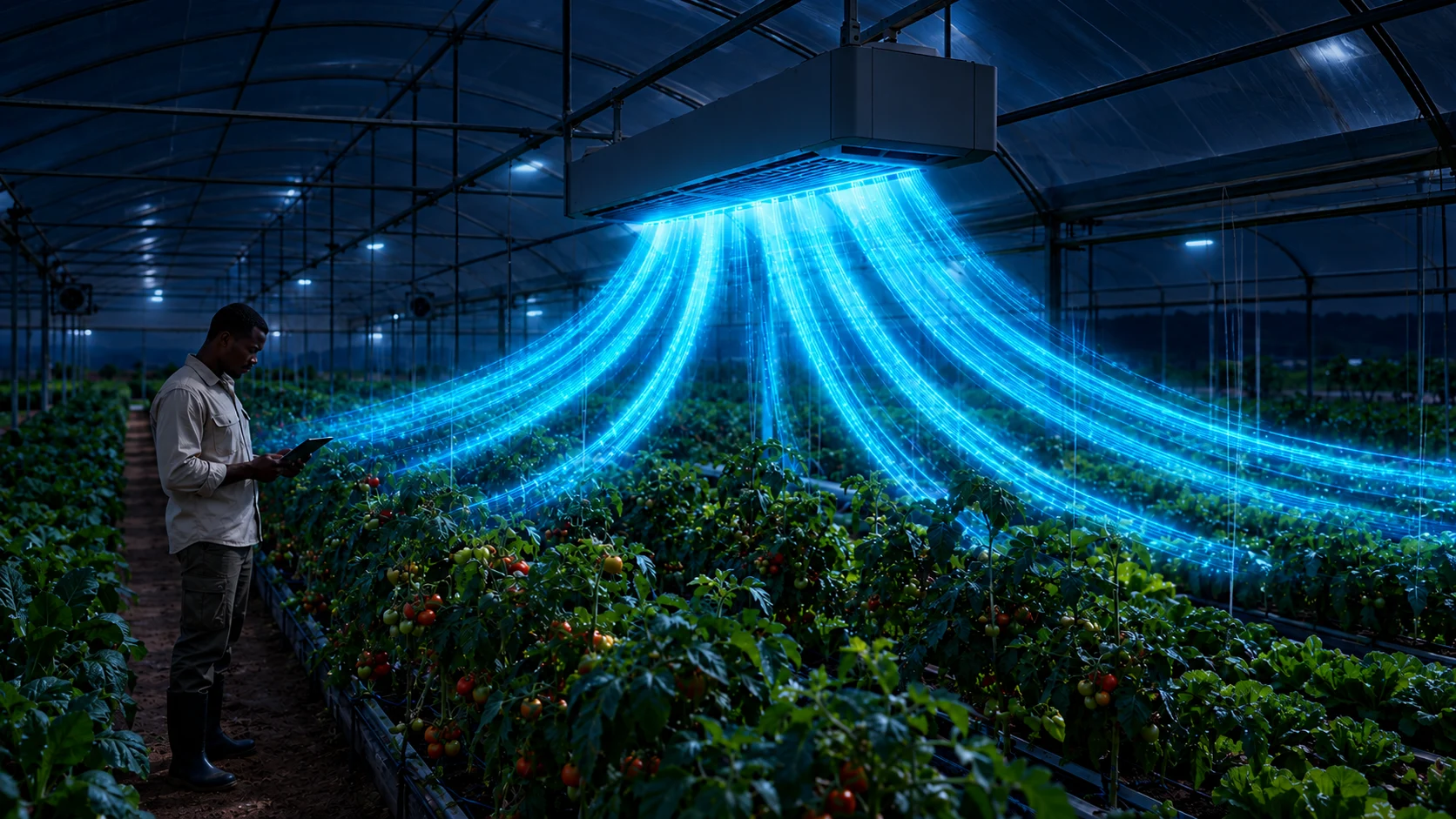
Illustration
Clean air moves across the crop rows from above, keeping the growing environment fresh.
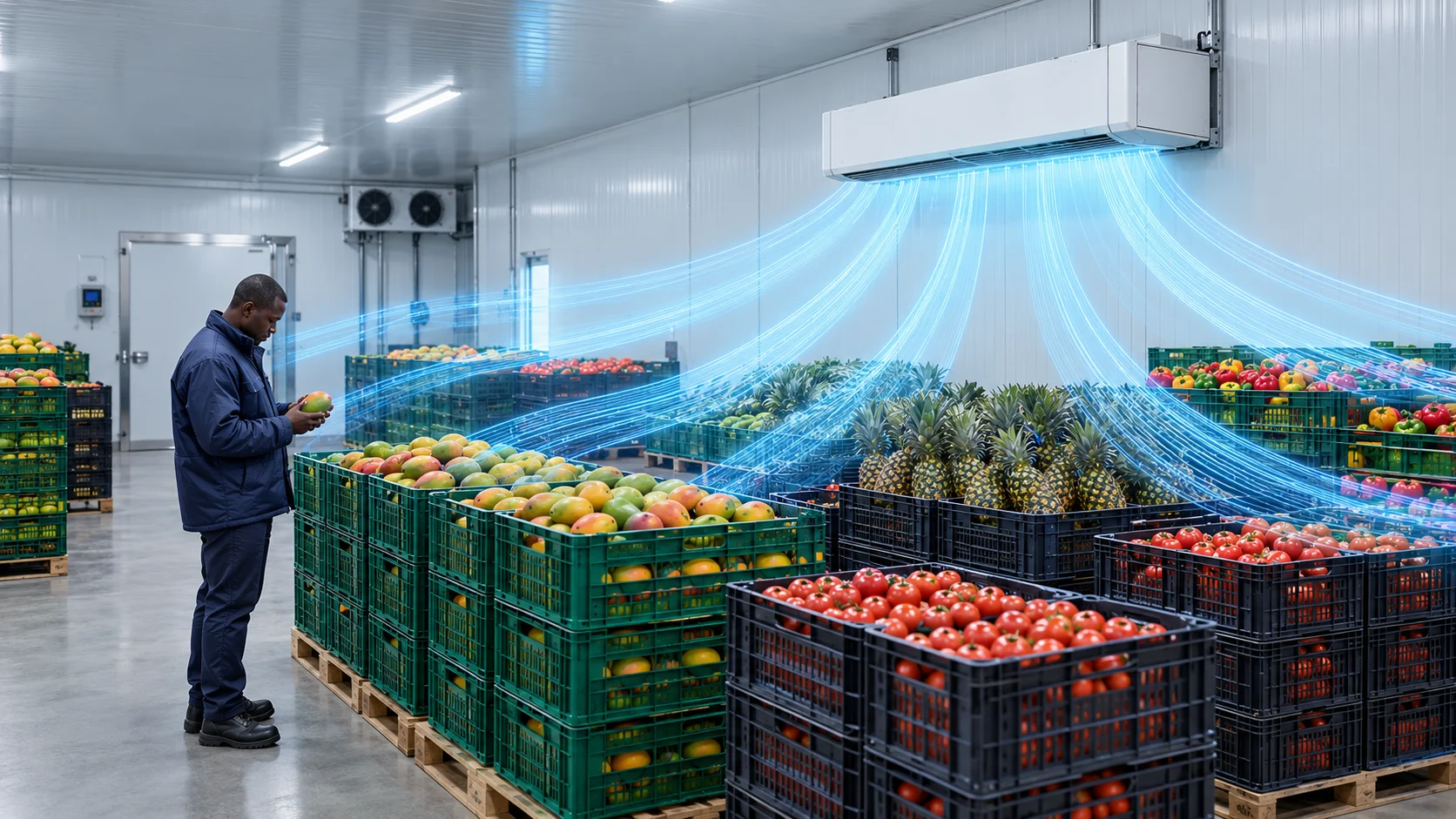
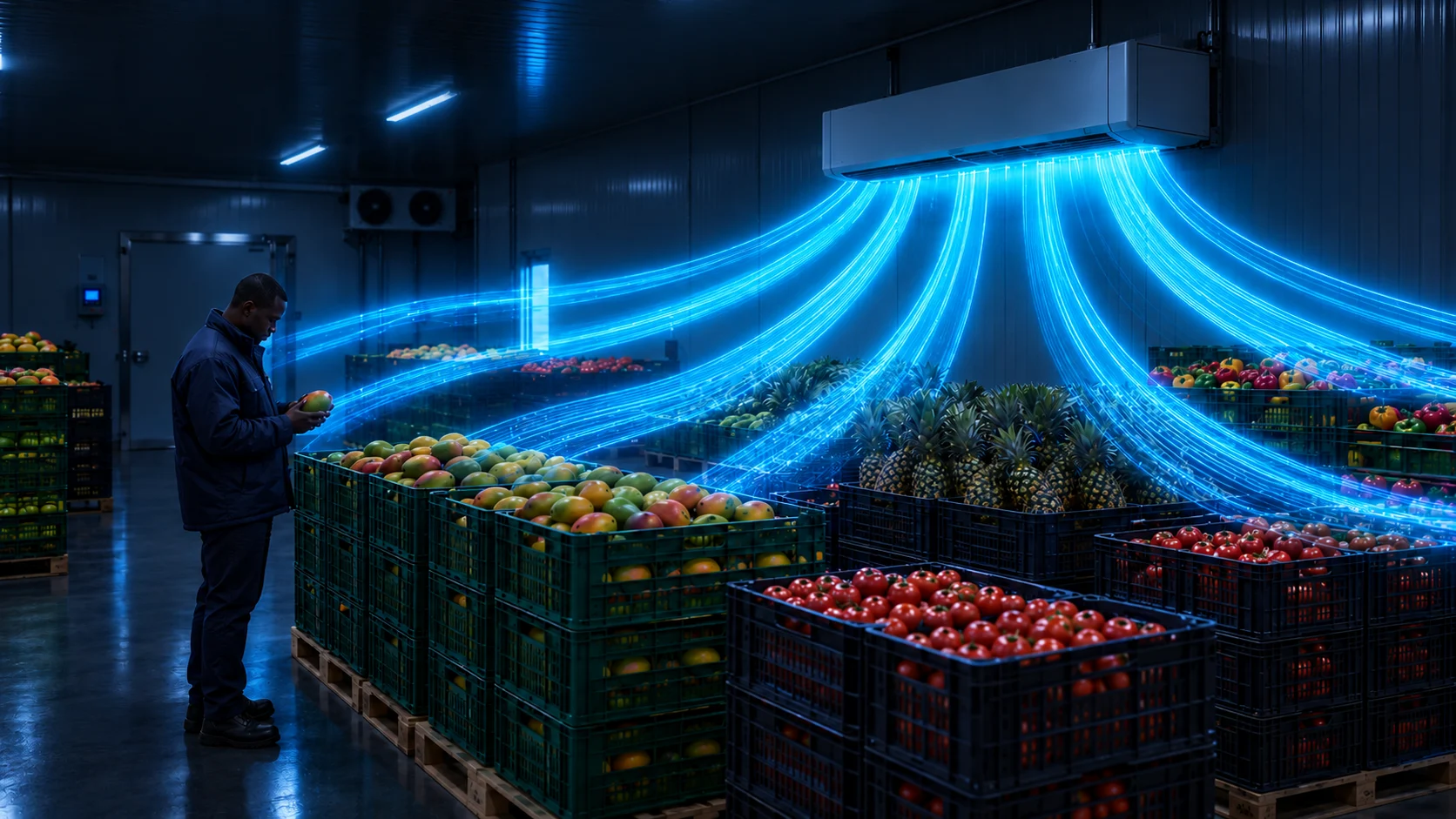
Illustration
Clean air flows between stacked produce in storage, helping harvests stay fresh for longer.
- Grain storage
- Enclosed, long dwell, little air exchange.
- Cold rooms
- Cold, humid, and recirculating by design.
- Packhouses
- High handling, high touch, continuous throughput.
- Transport staging
- Short holds where conditions change fastest.
The hardware
Wall-mounted, in-duct, or both.
Our product line offers flexible deployment options, from in-duct solutions that leverage existing infrastructure to advanced wall-mounted units and precise environmental sensing.
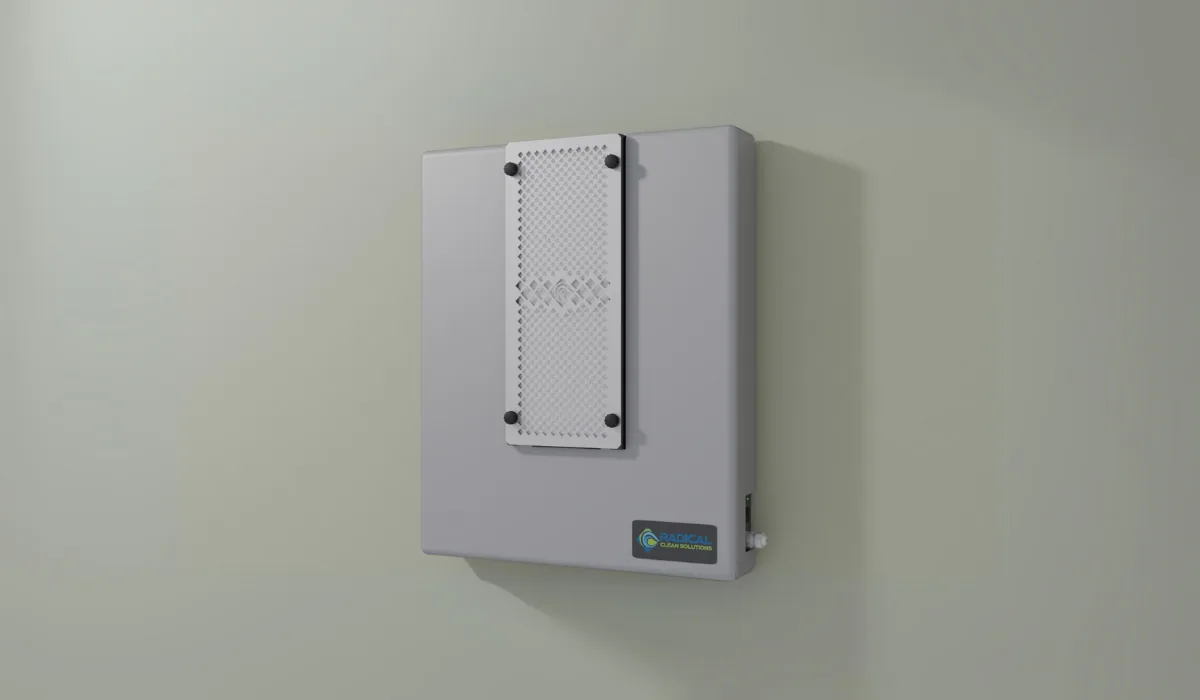
Wall-Mounted Units
Hardware manufactured by Radical Clean Solutions. Supplied, installed and maintained by Farkona.
- Coverage
- Smaller or personal spaces
- Installation
- Plug-in
- Technology
- Hydroxyl radical dispersion
Wall-Mounted Units
Designed for easy plug-in installation, the Radical unit disperses Hydroxyl Radicals throughout the area where it operates, creating an “Immune system for the environment.”
Specifications for the Wall-Mounted Units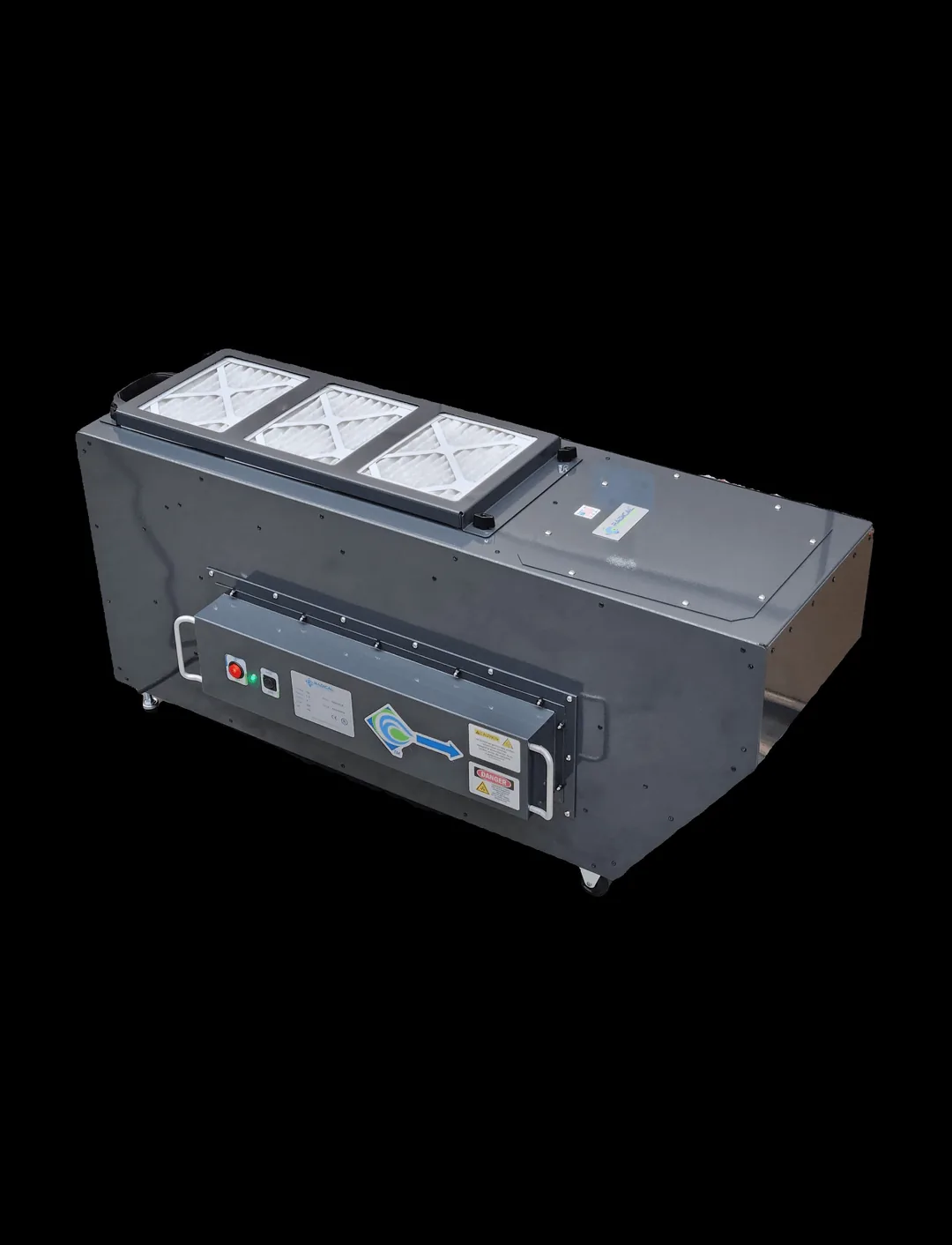
Wall-Mounted Units
QuadPro 4-Optic
Hardware manufactured by Radical Clean Solutions. Supplied, installed and maintained by Farkona.
- Coverage
- 2,000-4,000 sq. ft.
- Optics
- 4-optic
- Airflow
- 800 CFM
- Power
- 110V or 220V, plug-in
Wall-Mounted UnitsQuadPro 4-Optic
The 4-optic unit, with a high-output fan (800 CFM), is designed for spaces between 2,000-4,000 sq. ft. It operates on 110V or 220V plug-in power and includes Wi-Fi connectivity.
Specifications for the QuadPro 4-Optic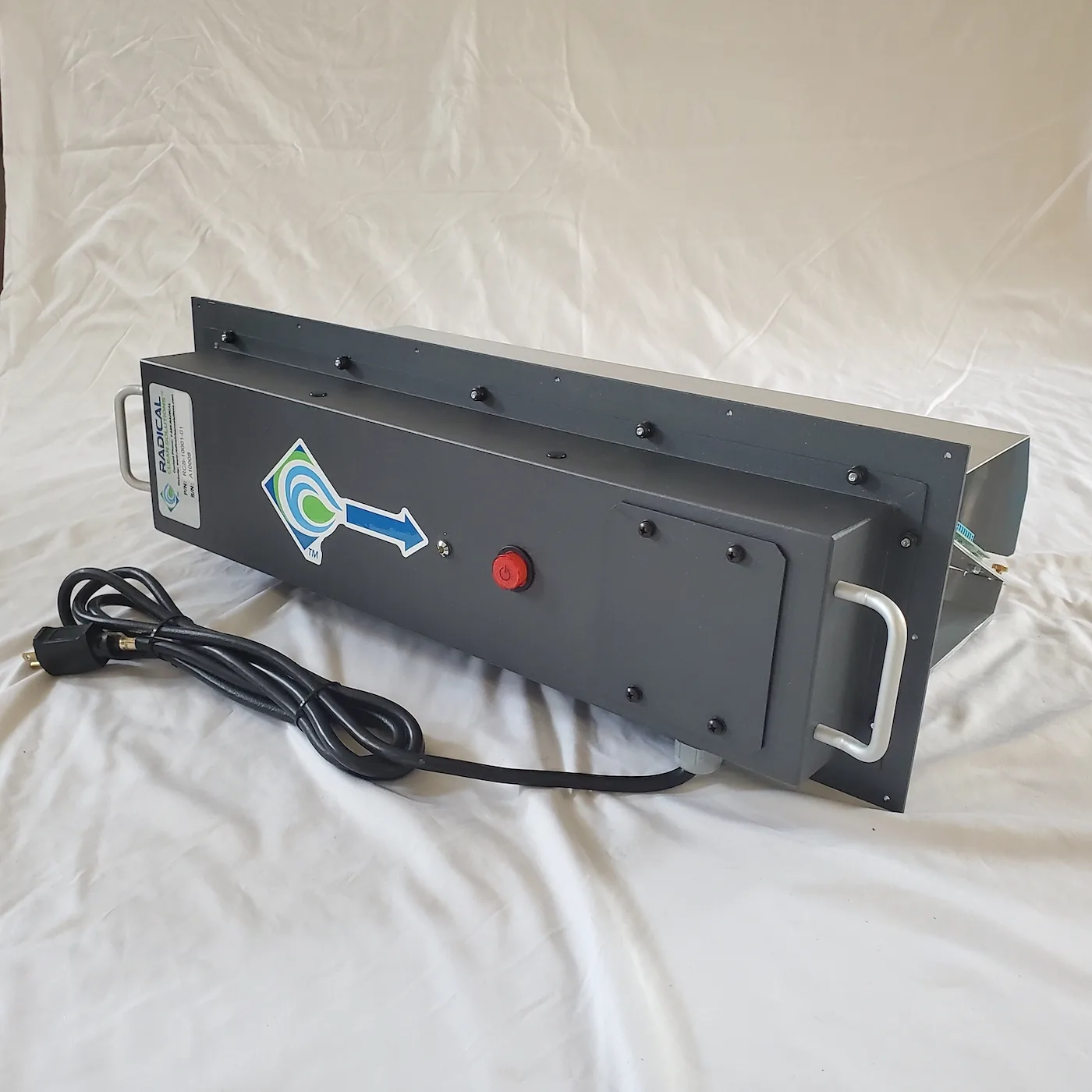
HVAC In-Duct System
HVAC Hydroxyl Generator
Hardware manufactured by Radical Clean Solutions. Supplied, installed and maintained by Farkona.
- Coverage
- Up to 3,500 sq. ft. (4-optic)
- Optics
- 2-optic and 4-optic models
- Power
- 110V or 220V
- Installation
- Retrofits into existing ductwork
HVAC In-Duct SystemHVAC Hydroxyl Generator
The unit retrofits easily into existing ductwork for central air, heating, or air distribution systems. The 4-optic model covers up to 3,500 sq. ft., with placement based on duct configuration.
Specifications for the HVAC Hydroxyl Generator
From pilot to scale
Prove it in one room before committing a building.
A structured evaluation path that provides objective verification of indoor air safety, allowing procurement boards to validate efficiency before capital expenditure.
Initial Assessment & Pilot Agreement
Baseline air purity metrics are established through on-site environmental monitoring, and the scope, duration and success criteria of the trial are formalised.
System Installation & Monitoring
Farkona systems are integrated into the designated pilot areas with minimal disruption, and conditions are monitored continuously for the duration of the trial.
Performance Review & Commercial Scale
Results are reviewed against the baseline, giving procurement boards objective verification before capital expenditure, and proven deployments extend across the estate.
Engineered performance. Uninterrupted operations.
Deploy
Installed and commissioned by certified engineers.
Monitor
Conditions observed continuously, not sampled.
Maintain
Calibrated and serviced on a defined schedule.
Support
Rapid-response assistance from the Accra team.
Get your quote
Start with one room.
A site assessment establishes what the space is doing now. Everything else follows from that measurement.
The more we know about how the environment is used, the more useful the baseline assessment will be.